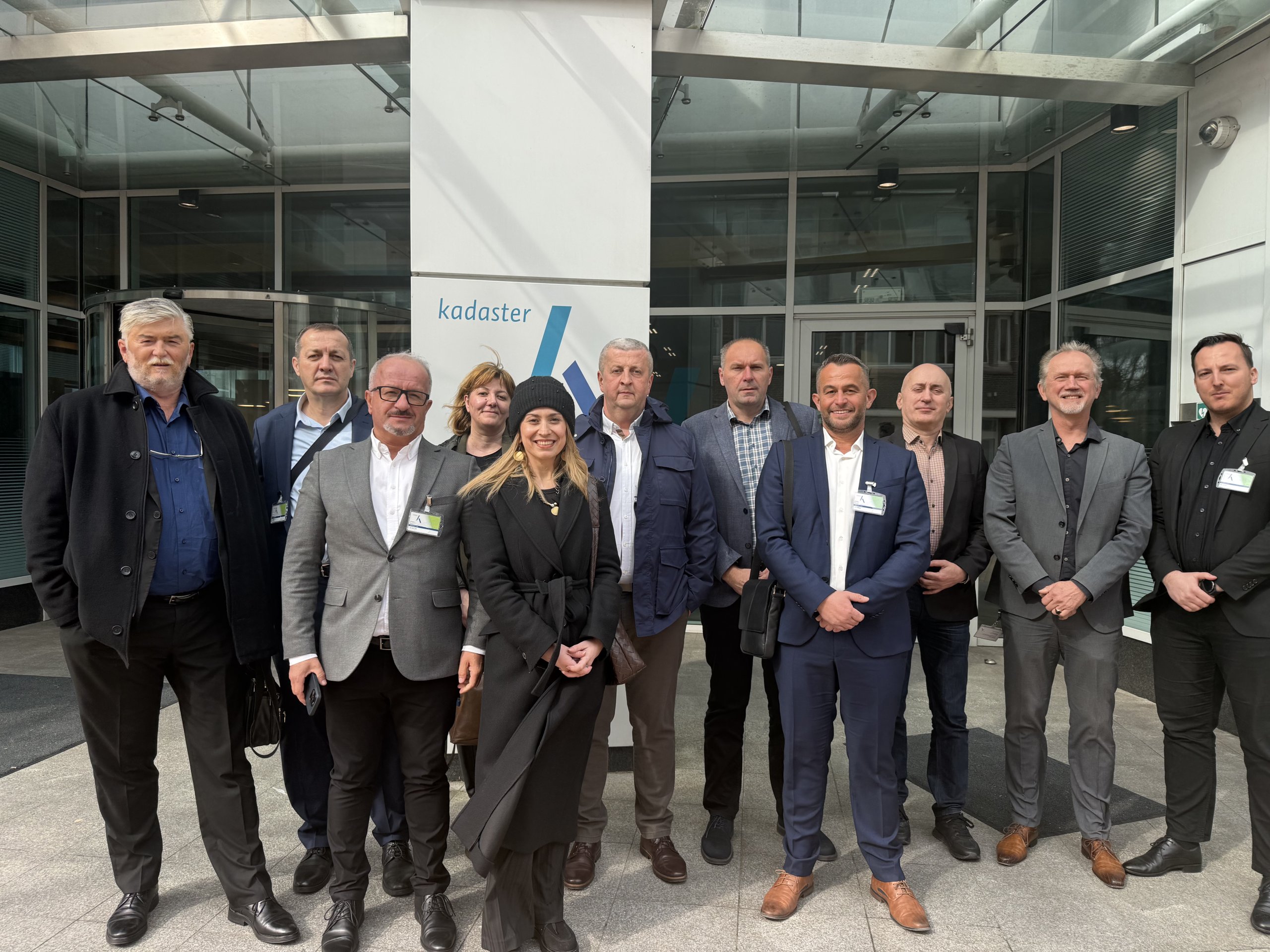
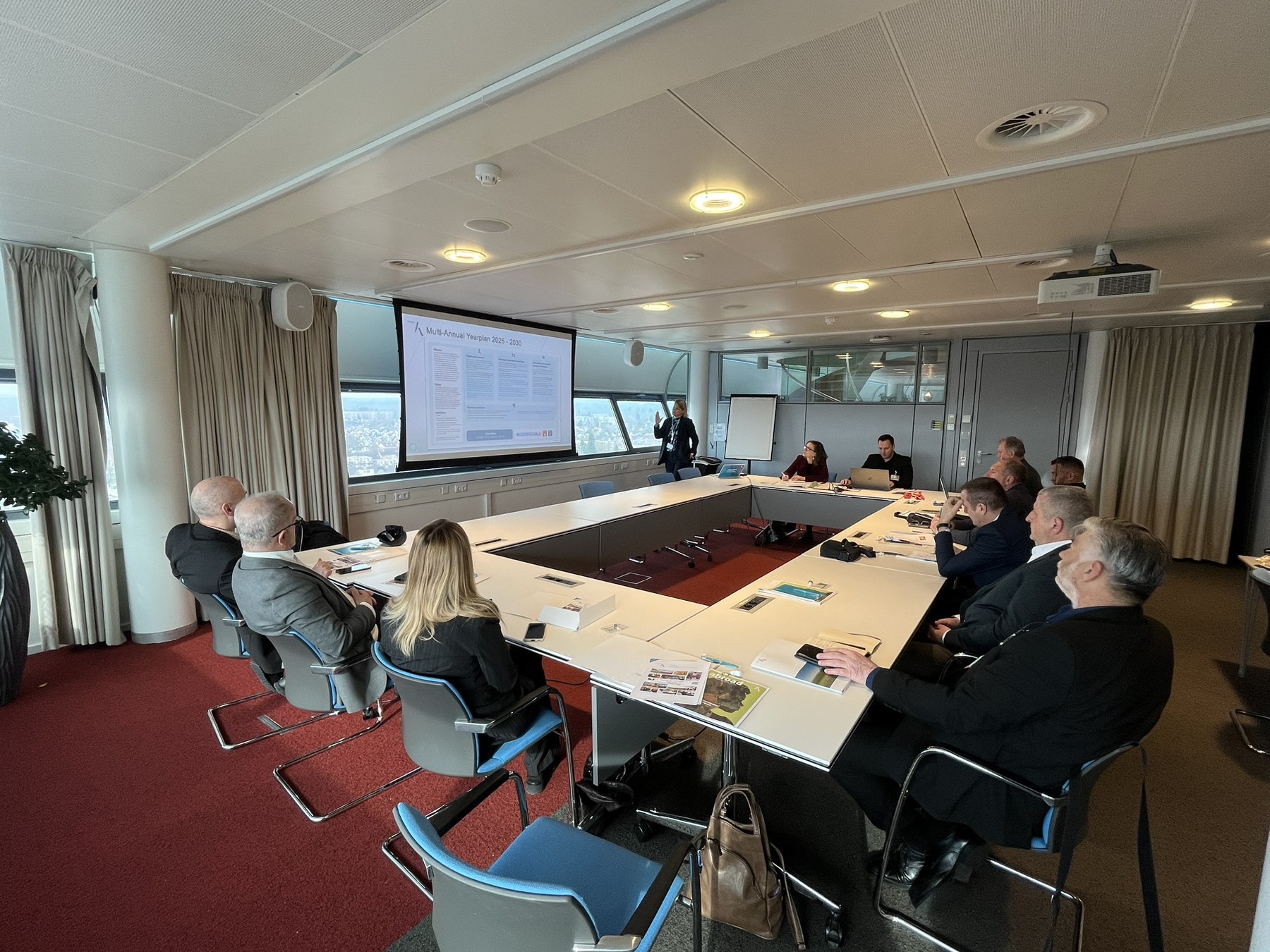
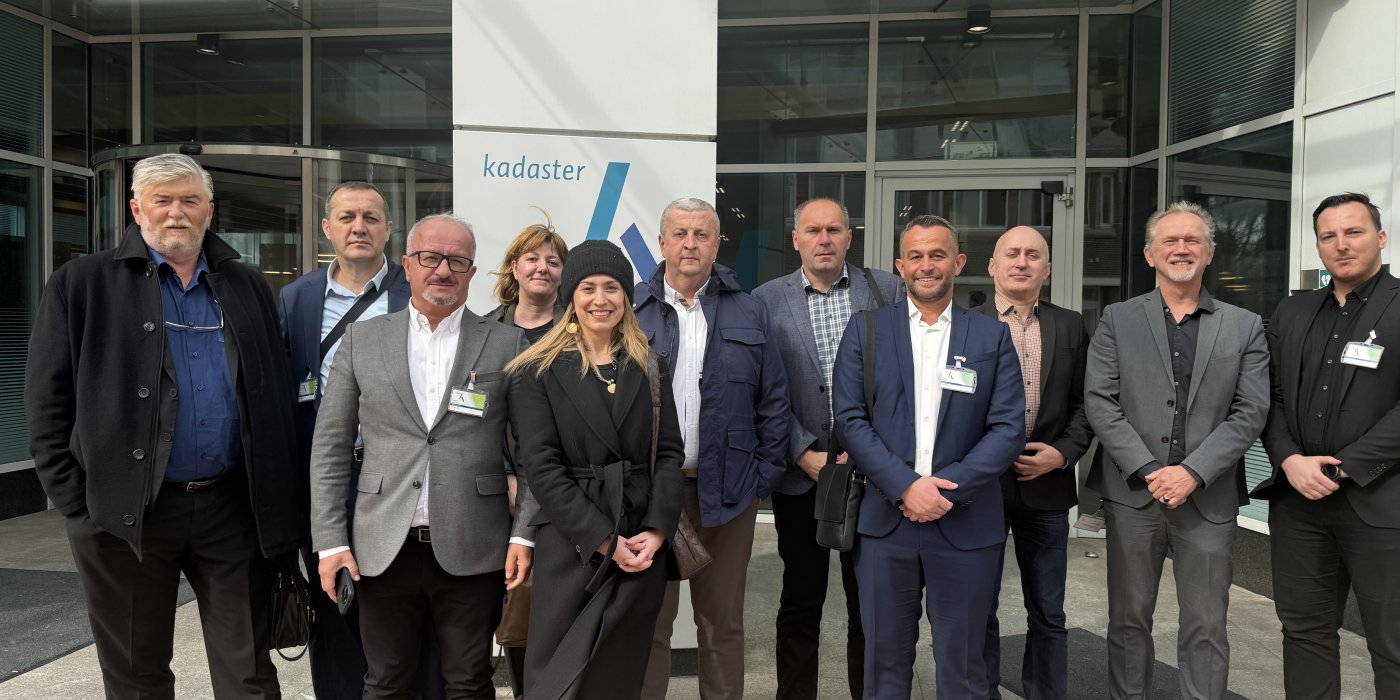
As part of the GeoConnect project, a study visit of the delegation of the Spatial Data Infrastructure Council of the Federation of Bosnia and Herzegovina (SDI Council FBiH) to the Kingdom of the Netherlands was carried out, with the aim of gaining insight into the experiences and practices of the Dutch Kadaster and other relevant institutions involved in the development and management of the national spatial data infrastructure. This visit represents a continuation of activities aimed at strengthening institutional capacities and improving coordination in the field of spatial data in the Federation of Bosnia and Herzegovina.
The delegation consisted of members of the SDI Council FBiH from seven federal institutions, representatives of the Federal Administration for Geodetic and Property-Legal Affairs, as well as an interpreter engaged to ensure the efficient implementation of the programme. The main activities of the study visit were held on 23, 24, and 25 March 2026, while the overall travel schedule was carried out in the period from 22 to 26 March 2026.
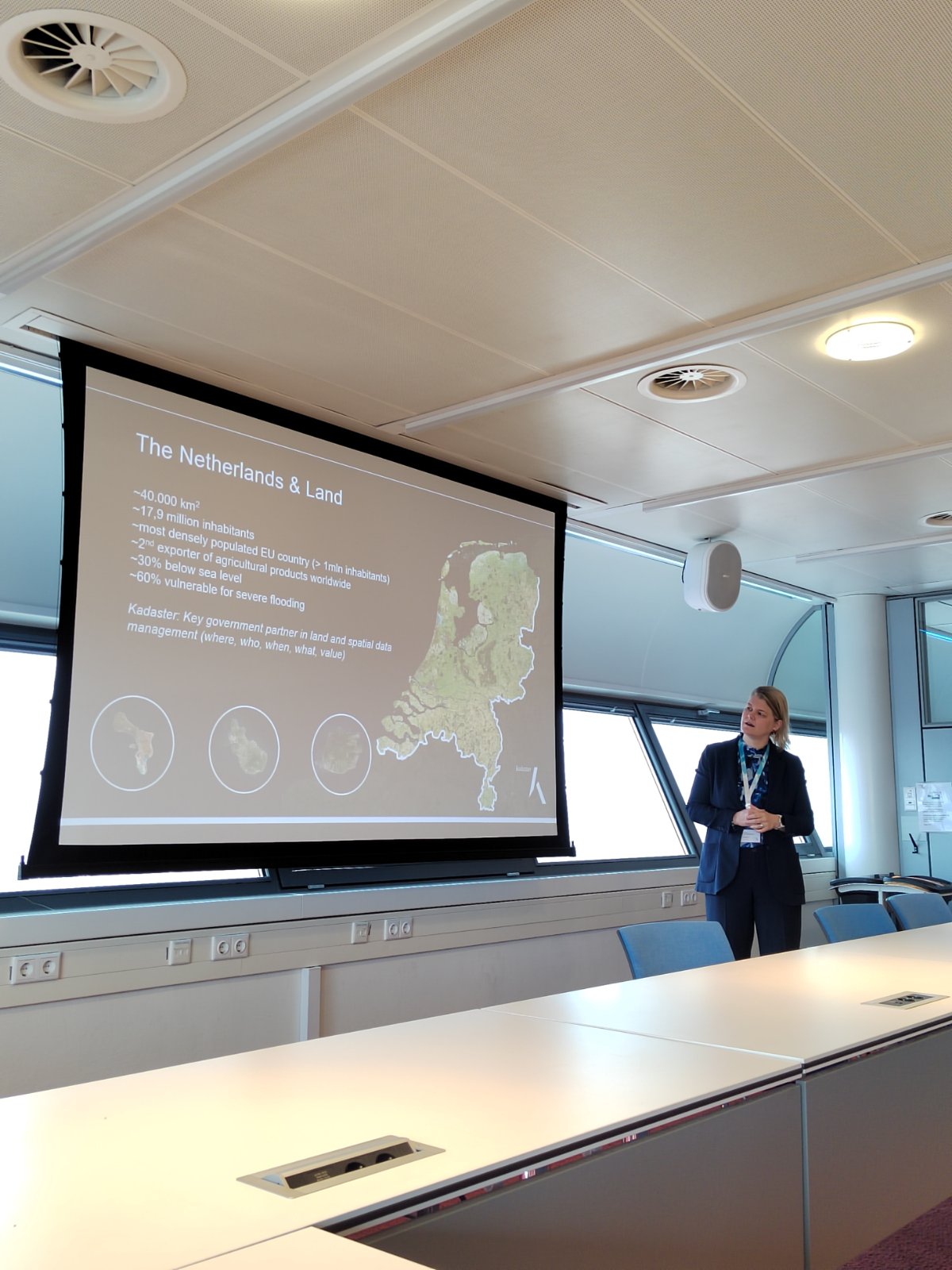
During their stay in Apeldoorn, the delegation visited the headquarters of the Dutch Kadaster, where expert presentations and working meetings were organised. The topics covered included the organisation and responsibilities of Kadaster, the system of key registers and the federated data system, the development of user interaction, the institution’s business model, as well as the importance of open data for public administration, the economy, and society as a whole. Special attention was given to the PDOK data platform, as well as to governance models, access, and innovation within the national spatial data infrastructure in the Netherlands.
Within the programme, the SDI Council FBiH delegation presented their own roles and responsibilities, the Strategic Development Plan up to 2028, as well as key challenges in the further development of the SDI in the Federation of Bosnia and Herzegovina. In this way, the study visit was not only an opportunity to learn about best practices, but also a platform for exchanging experiences and strengthening inter-institutional dialogue on the future development of spatial data, interoperability, and the digital transformation of the public sector.
On the second working day, the programme additionally covered topics such as innovation within Kadaster, the application of geo-artificial intelligence in business processes, and issues of cybersecurity, providing the delegation with a broader insight into contemporary challenges and development directions in the management of geospatial information.
The visit concluded with a meeting with representatives of Geonovum in Amersfoort, where governance models for spatial data infrastructure in the Netherlands were presented, including the roles and responsibilities of competent authorities, as well as key programmes supporting the development and standardisation of spatial data at the national level.
Through the implementation of this study visit, the SDI Council FBiH and the Federal Administration for Geodetic and Property-Legal Affairs have further strengthened international cooperation and acquired valuable knowledge that can contribute to improving the institutional and technical framework of the spatial data infrastructure in the Federation of Bosnia and Herzegovina. The experiences of the Dutch Kadaster and Geonovum represent a significant example of good practice in terms of register integration, data availability, openness, innovation, and inter-institutional coordination, which is of particular importance for future activities in the development of the SDI FBiH.